Xiaostaro first shelling and residents evacuation
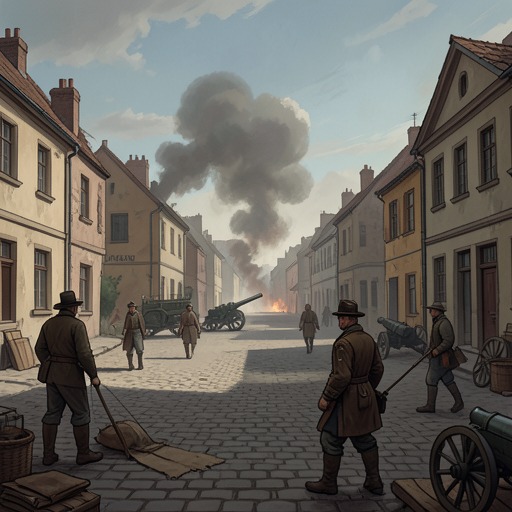
Grey BeesThe first shelling of Little Starhorodivka sets off the village’s evacuation and transforms the quiet Sergeyich had known into a wartime quiet shaped by absence. The church is struck first; residents leave in stages, and the deserted streets make the cost of the attack visible. Sergeyich and Pashka stay, not because they can restore the village to its former life, but because they believe that keeping it alive may give those who left somewhere to come back to.
The first shell and the departure
The church was the first building hit. Because it was wooden, it burned to the ground. Its destruction also had a later, practical consequence for Sergeyich: the following morning, he found two boxes of candles in the church’s stone outbuilding, which the blast had torn open. He took them home. He had donated beeswax to the church for years, so the candles seemed to him a gift returned at a moment when the power was cut and electric lights were useless. Their subsequent use by candlelight belongs to the long aftermath of the shelling, when ordinary means of lighting a home could no longer be relied upon.
Residents began leaving the day after the church was struck. Fathers first sent their wives and children to relatives elsewhere, including in Russia, Odessa, and Mykolayiv. The fathers departed afterward: some became separatists, while others left as refugees. Older residents were the last to go, and their departure was accompanied by tears and curses. This sequence gives the evacuation its shape: households were divided by successive departures, while the village’s remaining population steadily diminished.
The attack was part of a war whose meaning remained unclear to Sergeyich. He understood that the country had broken into conflict, but the reason for the war had been a mystery to him for three years. The first shelling therefore marks both a physical rupture in the village and the beginning of a prolonged condition that Sergeyich cannot make sense of politically, even as its effects become part of his daily life.
The village emptied
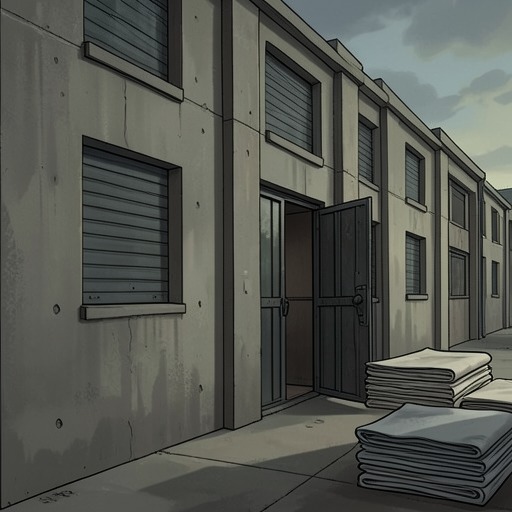
After the residents had left, Sergeyich ventured along Lenin Street and was nearly overwhelmed by the silence. He feared that he had been left alone. Moving cautiously, he looked over fences as he went; the doors were boarded shut, and some windows had been covered with plywood. He reached the ruined church, less than a kilometre from his home, then returned by way of parallel Shevchenko Street.
The silence changed when Sergeyich heard someone cough. He followed the sound to Pashka’s fence and found him sitting on a bench with vodka in one hand and a cigarette in the other. Until then, the two men had never exchanged greetings. Pashka explained that he would not give up his home: his cellar was deep enough to shelter in if necessary. Their first exchange thus establishes an unexpected point of connection. In a village from which people were fleeing, both men had reasons to remain, and each discovered that he was not entirely alone.
The narrative measures the abandoned village not only by boarded houses and empty streets, but by the disappearance of familiar human presence. The cough matters because it interrupts the silence and confirms that another resident remains. For Sergeyich, the discovery turns a fear of absolute isolation into the knowledge that he and Pashka are still there together.
Staying as a way to keep the village alive
The encounter with Pashka reaches across nearly three years of war. Sergeyich and Pashka have spent that time keeping the village alive. Their staying is not presented as a solution to the fighting; it is a wager on a possible future. If everyone left, Sergeyich believes, no one would return. If someone remained, former residents might come back when the political turmoil ended, or when the landmines were cleared and shells stopped falling.
That hope is deliberately conditional. The village’s future depends on changes neither man can bring about: the end of hostilities and the removal of mines. Their continued presence cannot undo the first shelling, restore the burned church, or reunite the households already dispersed. It can, however, keep the village from becoming wholly uninhabited and preserve the idea that departure need not be permanent.
Silence and the afterlife of the attack
The attack’s consequences continue in the soundscape of Sergeyich’s home. Before the war, ordinary quiet could absorb natural sounds such as an aeroplane overhead or a cricket at night. During the war, distant bombardments gradually became familiar enough to blend into what he experienced as silence. When snowfall muffled the bombardment, the quieter night felt incomplete: the sound he had grown accustomed to hearing had become part of his measure of normality.
The same altered quiet frames the small tasks of surviving. Sergeyich tends the stove and his bees, and later listens to an alarm clock beside a candle as its tick-tock settles into the silence of his home. He imagines releasing six regiments of bees into the fields when spring comes. The clock, candle, coal, and anticipated work with the bees do not erase the war; they mark the routines through which life continues under it.
The evacuation is therefore not confined to the moment when residents leave. Its lasting presence appears in closed houses, missing neighbours, interrupted electrical service, altered expectations of quiet, and the letters Sergeyich later sorts and delivers in the hope that absent residents will return. The village’s survival rests on these limited acts of maintenance and remembrance. Staying cannot guarantee that the houses will fill again, but it keeps open a future that complete abandonment would close.